Skip to content
Orange background with three connected white building blocks and the text “9 Industry, Innovation and Infrastructure.” Represents the development of resilient infrastructure and sustainable industrialization.
Orange background with white icons of various buildings, including a house and skyscrapers, and the text “11 Sustainable Cities and Communities.” Represents the goal to make cities inclusive, safe, resilient, and sustainable.
Mustard background with a white infinity loop featuring a curved arrow, and the text “12 Responsible Consumption and Production.” Symbolizes sustainable consumption and production patterns.

Seminar on Sens4Corn Project Activities at the Institute of Materials Science

Important | 2026-03-18

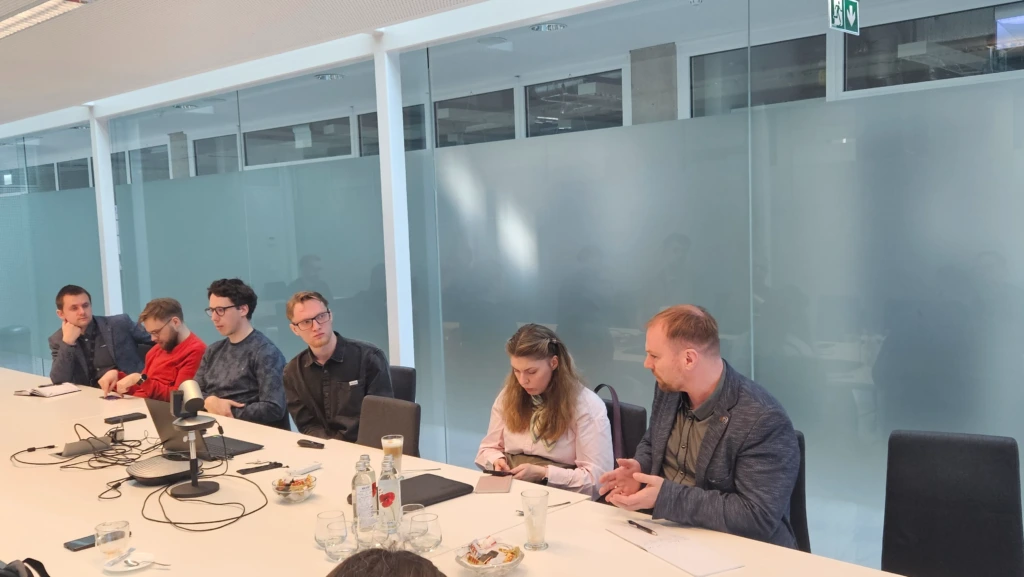
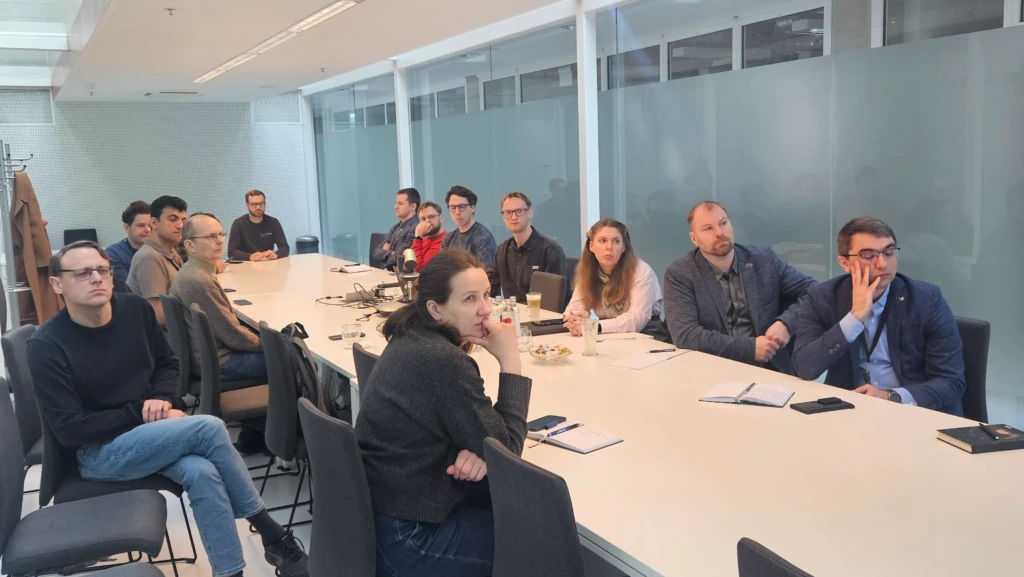
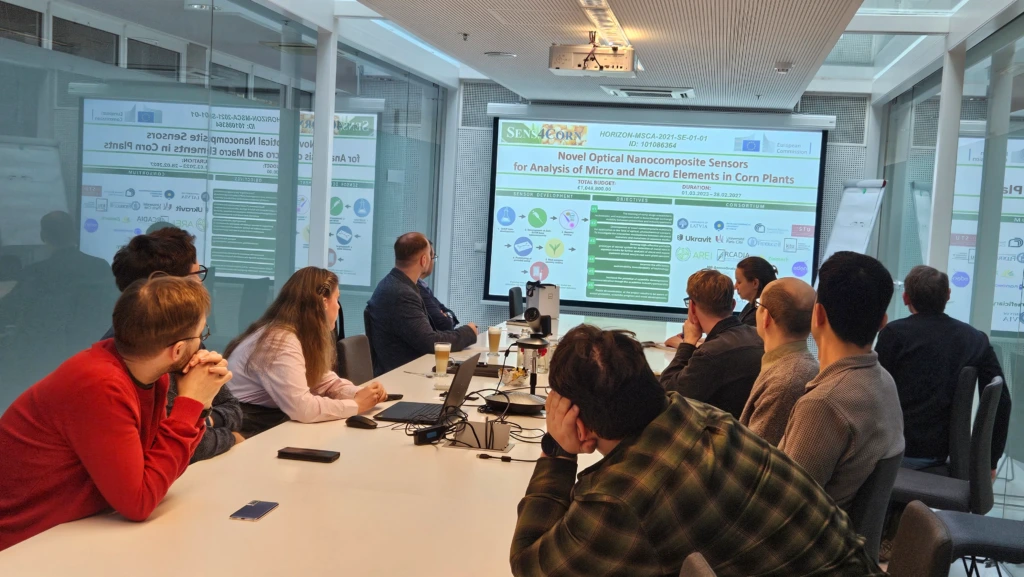
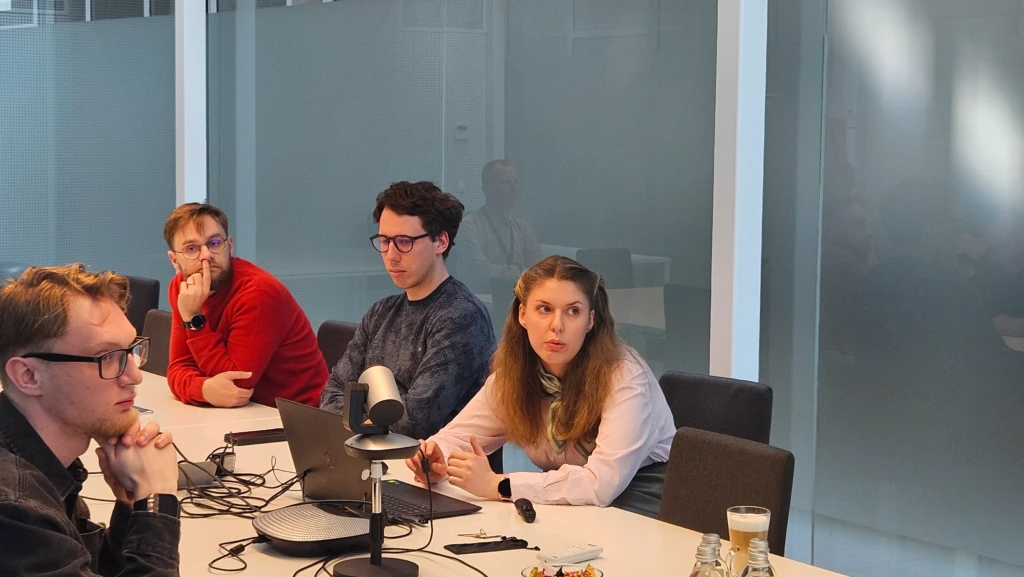
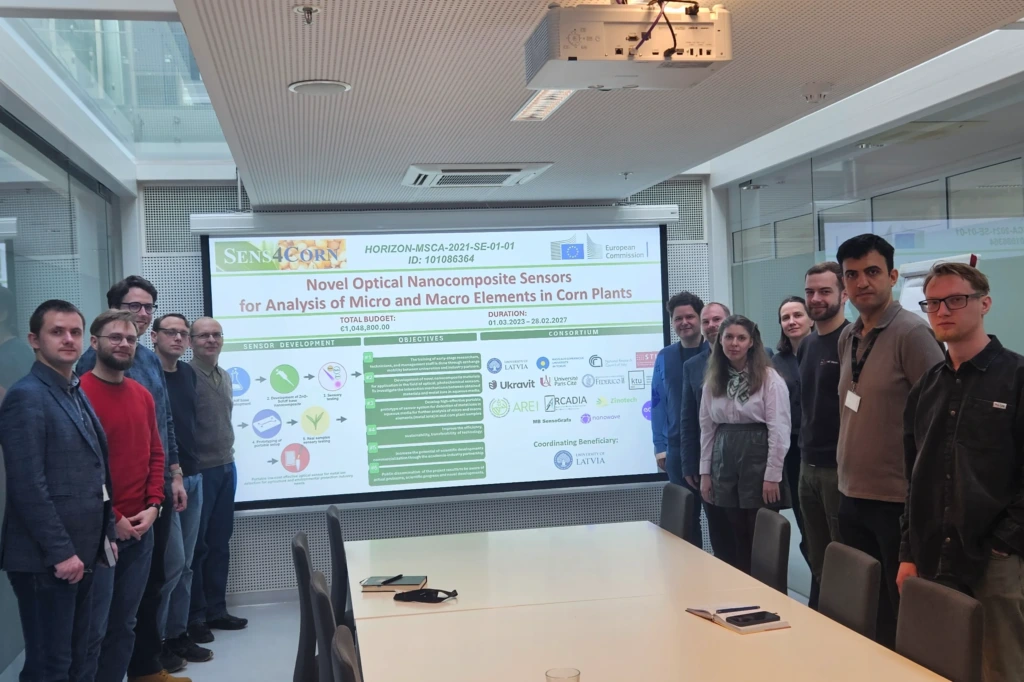
The Institute of Materials Science hosted a seminar as part of the ongoing activities of the Sens4Corn project, bringing together researchers and project partners to discuss recent scientific progress in materials science and sensor development. The event featured two invited speakers from the University of Latvia, whose presentations contributed valuable insights to the project’s research themes.

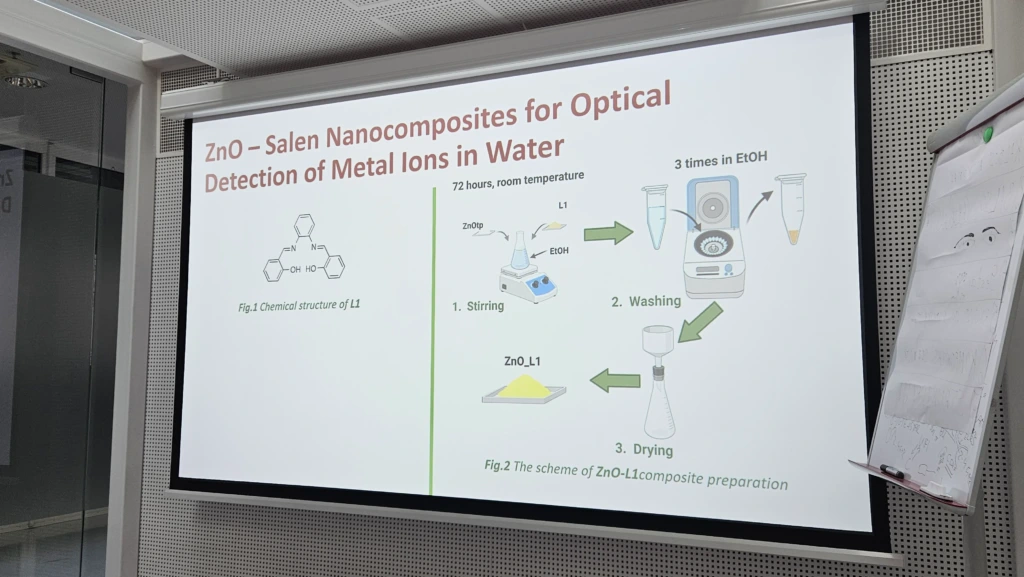
The first guest, Iryna Tepliakova from the University of Latvia, presented “Sens4Corn Project. Schiff Base – ZnO Optical Sensors for Metal Ions in Aqueous Media.” She introduced the development principles of hybrid Schiff base–ZnO sensing materials and discussed their optical response to metal ions in water-based environments.
During the presentation, Iryna talked about the general approach of the Sens4Corn project. The presentation focused primarily on ZnO-Schiff base organic ligands. Schiff bases are a broad group of organic materials with the ability to chelate metal ions from liquid media. Such ligands can be easily tuned to improve selectivity and sensitivity to the initial ion type. A significant disadvantage of Schiff bases and other similar ligands is that they are typically used in solution form, which is not applicable to real field conditions. The proposed solution is to create a sensitive and selective layer on a nanostructured template with a large surface area, good chemical stability and good optical properties, such as ZnO.

The report mentioned several types of nanocomposites based on zinc oxide with different surface morphologies. The composites were prepared by depositing an organic ligand onto the surface of ZnO nanotetrapods and nanofibers. The resulting composites were applied to glass substrates and used as a sensor chip for detecting metal ions in ethanol and water solutions. Sensor testing was performed by measuring the time-resolved photoluminescence in a fluid system.

The second speaker, Ruslans Kačanovs, delivered a presentation titled “Preformulation of Naproxen–Polymer System in Amorphous Solid Dispersion.” His talk focused on the fundamentals of designing and characterizing amorphous solid dispersions, with particular emphasis on the interactions between naproxen and selected polymeric carriers.

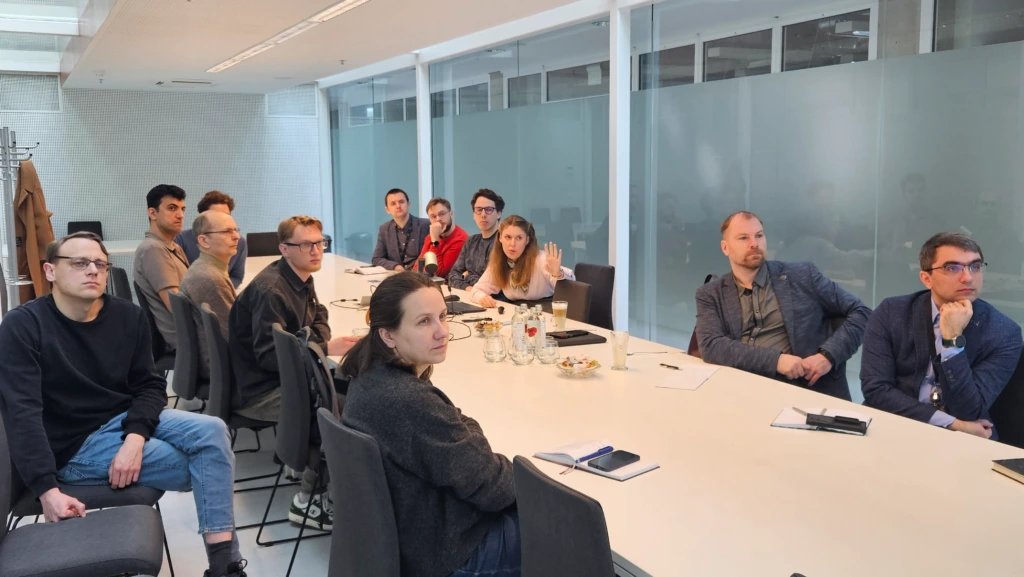
The seminar fostered active scientific dialogue among participants, encouraging the exchange of expertise in material design and sensor technologies. The discussions highlighted the importance of interdisciplinary collaboration within the Sens4Corn project and identified several promising directions for future research and joint activities.

The Sens4Corn project focuses on the development of innovative sensing technologies that support sustainable and precise agricultural practices. By integrating advanced materials, analytical approaches, and interdisciplinary expertise, the project aims to create tools that improve monitoring capabilities in agricultural environments.
More information about the project can be found here: https://www.sens4corn.eu/